Introduction
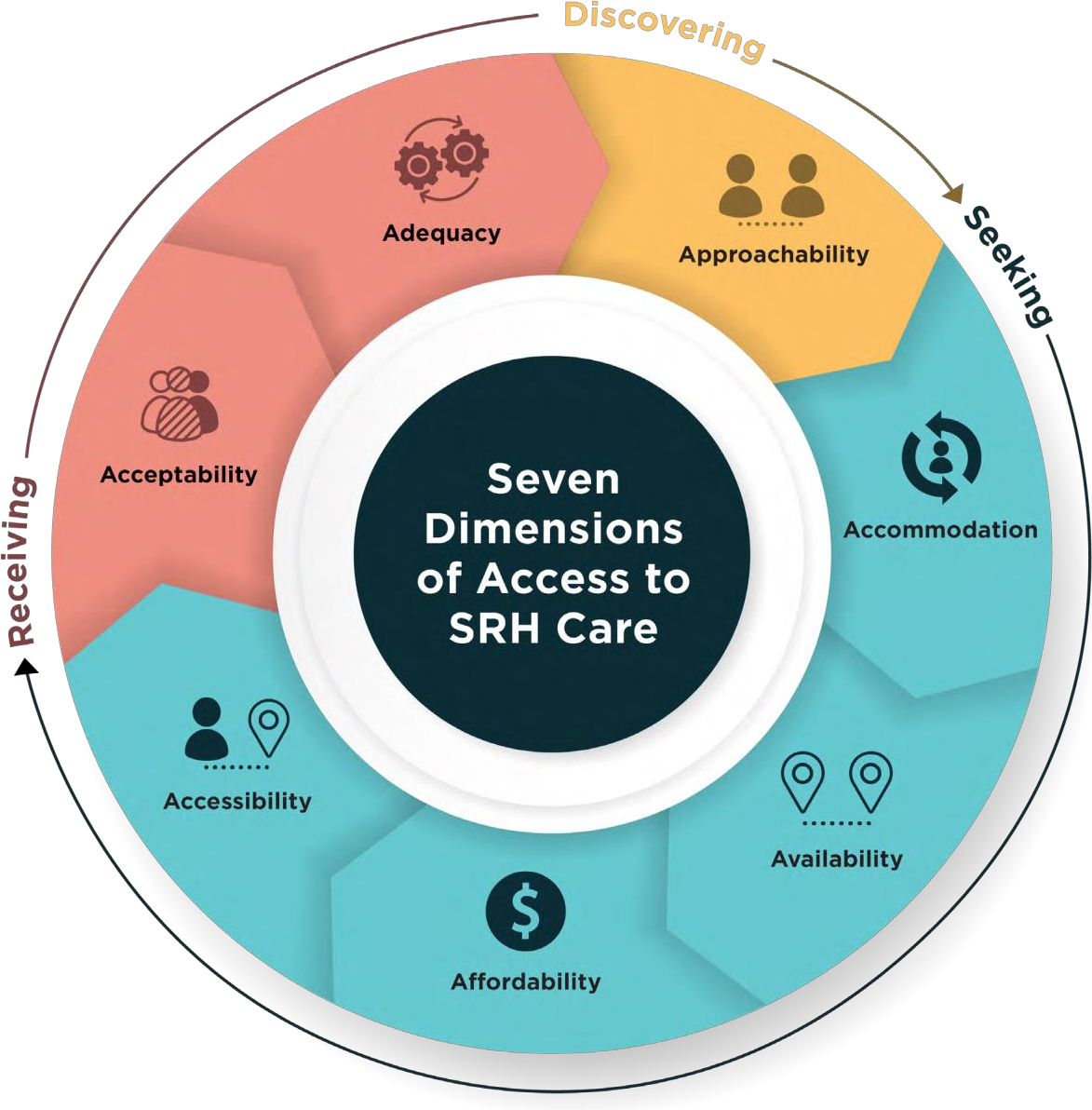
Identifying Accessible Sexual and Reproductive Health Resources in Your Community is a tool to help you, as youth-supporting professionals, scan the landscape of sexual and reproductive health care providers for teens and youth. When you know the landscape, you can intentionally refer youth to providers who meet their individual needs. The information in this tool is based on a research summary from Activate: The Center to Bring Adolescent Sexual and Reproductive Health Research to Youth-Supporting Professionals, which describes seven dimensions of access to sexual and reproductive health care.a
This landscape scan tool walks through the seven dimensions of access to sexual and reproductive health care. You will engage with questions and research-based examples about each dimension of access, a guided opportunity to reflect on your answers, and potential strategies to consider your next steps. You will begin to critically determine how to address barriers and facilitators to accessing sexual and reproductive health care for youth who have diverse needs.
Lack of access to sexual and reproductive health care and education can lead to greater risks to health and other negative outcomes.1,2 Youth who have experience with the child welfare and/or justice systems, homelessness, and/or disconnection from school and work face additional barriers in access to care3–5 due to limited access to health education and public systems that may restrict how and when they can receive sexual and reproductive health care services.6
How to use this tool
- Identify providers in your community: Use online searches and/or your network to compile a list of sexual and reproductive health care service providers in your community (e.g., clinics, school-based health centers, hospitals). The list might include providers to whom you already refer youth for sexual and reproductive health care services and/or providers to whom you would like to begin referring youth.
- Complete the worksheet: Complete Section A: Exploring the Seven Dimensions of this worksheet for each sexual and reproductive health care service provider on your list that serves youth. For some of the questions, you may not know the answers—which is acceptable. Based on your responses to the guiding questions provided, select the option that best represents your assessment of the provider’s capacity to provide accessible care.
- Review and reflect: Review and reflect on your assessment using Section B: Reflecting on the Seven Dimensions. Some of the dimensions may be more critical than others to the youth you serve. You may need to gather additional information on certain dimensions to better assess the questions for a comprehensive understanding. On a periodic basis, update your understanding and reflect on each provider individually and the collective network of providers in your community.
- Consider next steps: Consider the strategies in Section C: Applying Next Steps to guide your next steps.
Section A. Exploring the Seven Dimensions
Answer the guiding questions for each dimension of access. Based on your overall knowledge, indicate for each dimension whether you believe the provider (A) is weak, (B) you are unsure, or (C) is strong.
Name of Provider/Organization: Location:
Approachability 
- Is it clear that youth are involved in their marketing and outreach plan?
- Do the services and/or resources appear relatable or relevant to what youth need?
- Are youth you work with aware of/familiar with the service/provider?
- Are youth engaged and hands-on in the design or delivery of services?
Website does not mention serving youth or offering youth-specific services
Youth ambassadors promote the services on social media and in the community
- A. Weak
- B. Unsure
- C. Strong
Accommodation 
- Are the hours convenient for youth?
- Are same-day or walk-in appointments available?
- Is telehealth an option?
- Does the provider offer help with filling out medical forms?
Clinic only has weekday hours, requires an appointment, and telehealth is not an option
Clinic has evening and weekend hours, allows for walk-ins, and offers telehealth appointments
- A. Weak
- B. Unsure
- C. Strong
Availability 
- Does the provider offer all the sexual and reproductive care services the youth you serve might need, including health education, counseling, contraceptives, STI prevention and treatment, and abortion?
- Does the provider offer support for expectant and parenting youth including prenatal, labor and delivery, and/or postpartum care?
Clinic only provides limited contraception options
Clinic offers a full array of sexual and reproductive care options including all types of contraceptives and pregnancy care
- A. Weak
- B. Unsure
- C. Strong
Affordability 
- Does the provider offer free or low-cost care?
- Does the provider accept Medicaid?
- Will the provider help youth identify ways to pay for care (e.g., Medicaid or insurance) and help them enroll in or use those mechanisms?
Services are cost-prohibitive and the provider does not accept Medicaid
Services are affordable due to sliding-scale fees, Medicaid acceptance, and/or other alternatives
- A. Weak
- B. Unsure
- C. Strong
Accessibility 
- Is the facility easy to reach by car, public transportation, or walking?
- Are the facility and the surrounding area safe?
- Is the facility accessible for youth with mobility or other disabilities?
Clinic cannot be reached via public transit and is in an area with no sidewalks
Clinic is on or near public transit lines and the area is walkable
- A. Weak
- B. Unsure
- C. Strong
Acceptability 
- Does the diversity of the staff represent the intersecting identities and experiences of youth you serve?
- Is the environment safe for all youth?
- Is the provider flexible, knowledgeable, and willing to adjust to the beliefs and norms of the youth you serve?
- Does the provider apply trauma-informed approaches, such as sensitivity to safety, choice, respect, trustworthiness, empowerment, and peer support?
Clinic staff are not knowledgeable of the youth served, nor are they making efforts to learn
Clinic staff are diverse and have a great understanding of the youth they serve
- A. Weak
- B. Unsure
- C. Strong
Adequacy 
- Does the provider take a holistic approach to servicing youth by providing comprehensive care that considers all their needs?
- Is the provider timely in following up with youth after appointments?
- Is the clinic well connected to other youth-friendly services and/or providers?
- Does the clinic coordinate care across settings?
Clinic does not coordinate care or tailor services to youth needs
Clinic has a care coordinator who follows up with youth and ensures that services align with their needs
- A. Weak
- B. Unsure
- C. Strong
Section B. Reflecting on the Seven Dimensions
Fill in the table below with your responses for each of the dimensions in Section A.
| Dimension of Access | Response (Weak, Unsure, or Strong) |
|---|---|
| Approachability | |
| Accommodation | |
| Availability | |
| Affordability | |
| Accessibility | |
| Acceptability | |
| Adequacy |
Take a moment to review your responses carefully. To guide your reflection of the responses, walk through these questions on your own or with your colleagues.
- What additional information do you/your colleagues need from the provider to gain a better understanding of their position on each dimension?
- Do you have the capacity to train or provide guidance to this provider about the needs of your youth?
- Based on your organization’s values and priorities, is this a provider you want to consider as a referral partner for sexual and reproductive health services?
- How does this provider compare to others in your community?
- If this provider is the only provider in your community and does not fully meet youths’ needs, how can you support and advocate for youth who need to access sexual and reproductive health care from this provider?
Section C. Applying Next Steps
You can use the following strategies and resources to support youth and enhance their ability to access sexual and reproductive health care in your community.
Strategies
- Set up meet-and-greets with the providers in your community.
- Provide youth gift cards, ride shares, or bus/public transit tokens to assist with transportation needs.
- Develop and/or offer training for providers focused on the sexual and reproductive health needs of the youth you serve.
- Conduct follow-up meetings with youth referred to these providers to assess their experiences.
- Connect with an existing coalition or convene a local task force with other community organizations and/or providers to ignite a coordinated care network.
- Educate youth on local/state policies and on their rights as they relate to sexual and reproductive health care in individual or group discussions.
Resources
- Intersections in the Work to Ensure Youth in State Custody have Access to Sexual Health Care—Fact sheet on how access to sexual and reproductive health care in juvenile justice settings intersects with other youth identities.
- Healthcare Provider Survey Report—Report on providers’ experiences providing sexual and reproductive health care to youth in the child welfare system and recommendations to improve access.
- Trauma Informed Consequences (TICs) for Youth Experiencing Homelessness—Tip sheet on applying a trauma-informed approach to working with and serving youth who have experiences with homelessness.
- Supporting the Sexual and Reproductive Health of Youth in Foster Care After Roe—Overview of the barriers to sexual and reproductive health care for youth in the child welfare system and recommendations to improve access since the overturning of Roe v. Wade.
Footnotes
- Each of the examples used to illustrate the dimensions is based on this research summary. At the end, there is a full list of references provided. ↩