Opportunity youth are young people ages 16 to 24 who are not working nor enrolled in school. They are a diverse group who come from different backgrounds, races/ethnicities, and communities and who have varying strengths, resources, and needs. This infographic highlights key findings from Activate’s analysis of the sexual and reproductive health (SRH) of opportunity youth using the National Survey of Family Growth. Learn more through Activate’s research brief, “Understanding the Sexual and Reproductive Health of Opportunity Youth.”
Sexual and Reproductive Health Outcomes
Much like their connected peers (who are in school and/or working), most opportunity youth are sexually active.

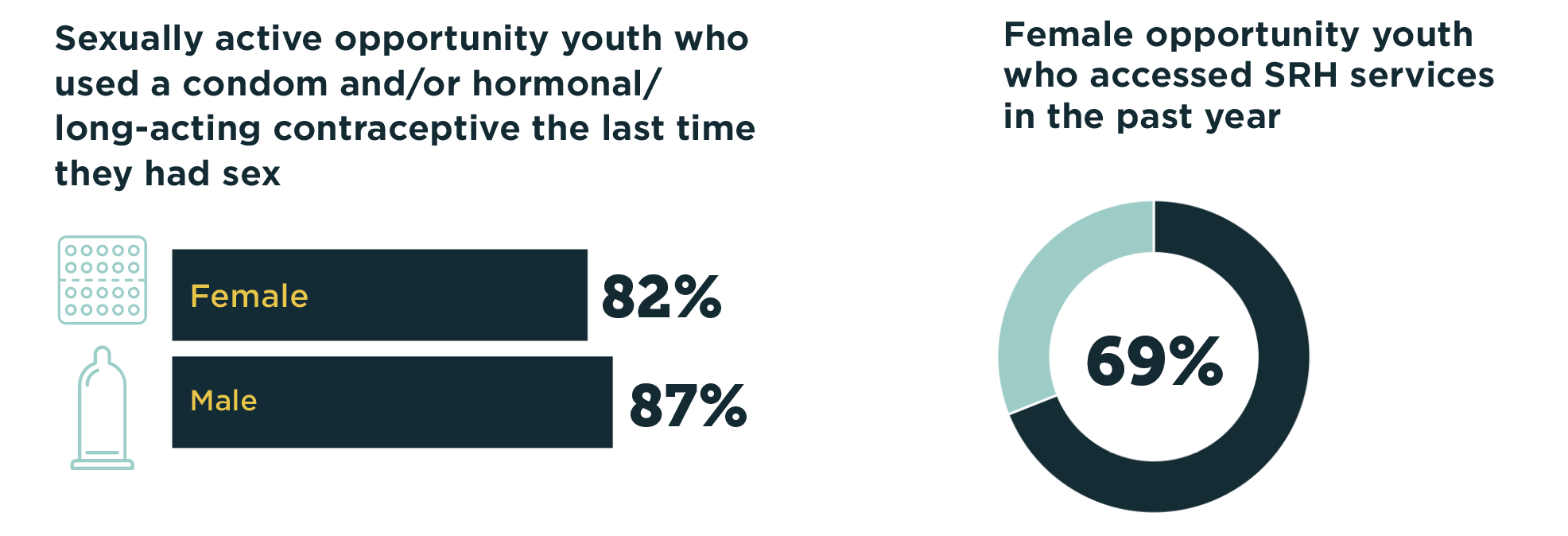
Most opportunity youth use effective contraception and the majority of female opportunity youth access sexual and reproductive health care services.
Female opportunity youth are more than twice as likely as their connected peers to have experienced a pregnancy and to have a child.
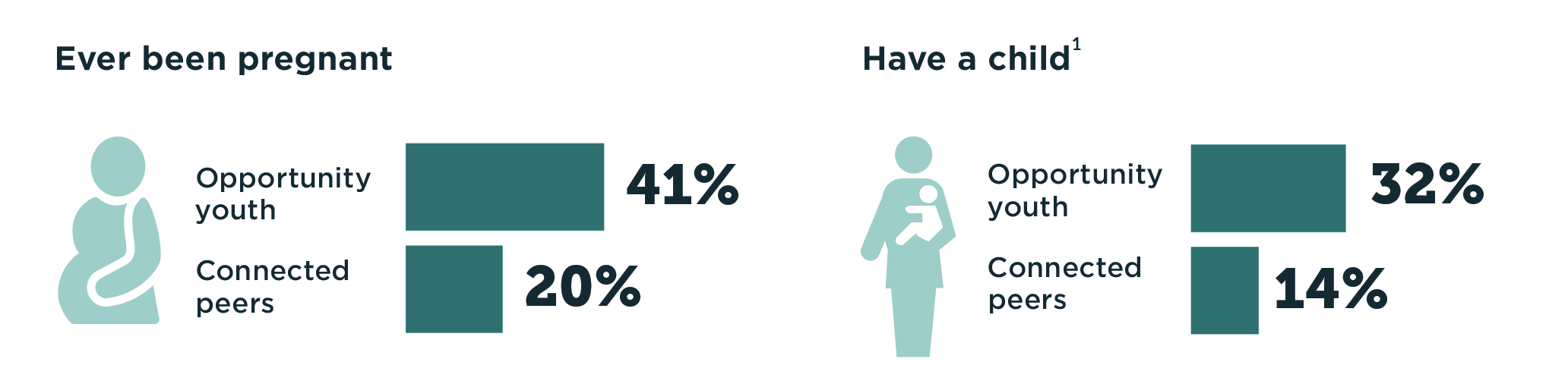
1We do not know whether the opportunity youth in our analysis were disconnected from school and work prior to giving birth.
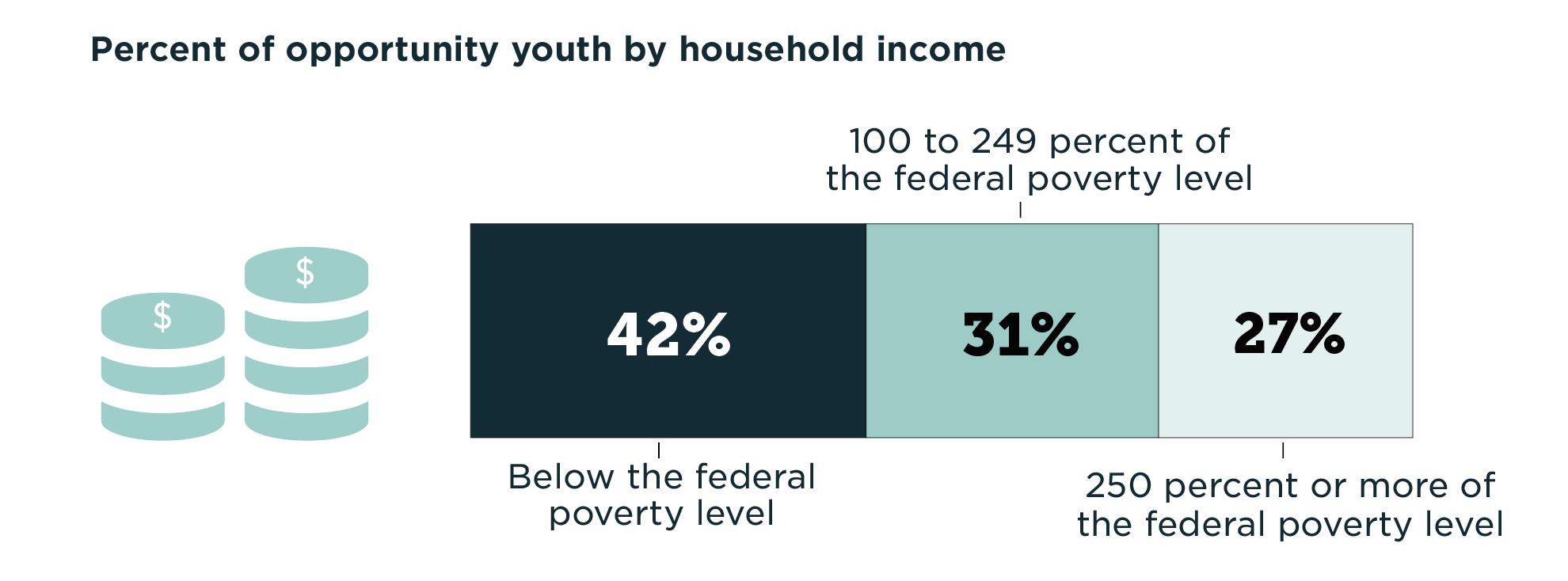
Opportunity youth have access to, and may need, different types of supports.
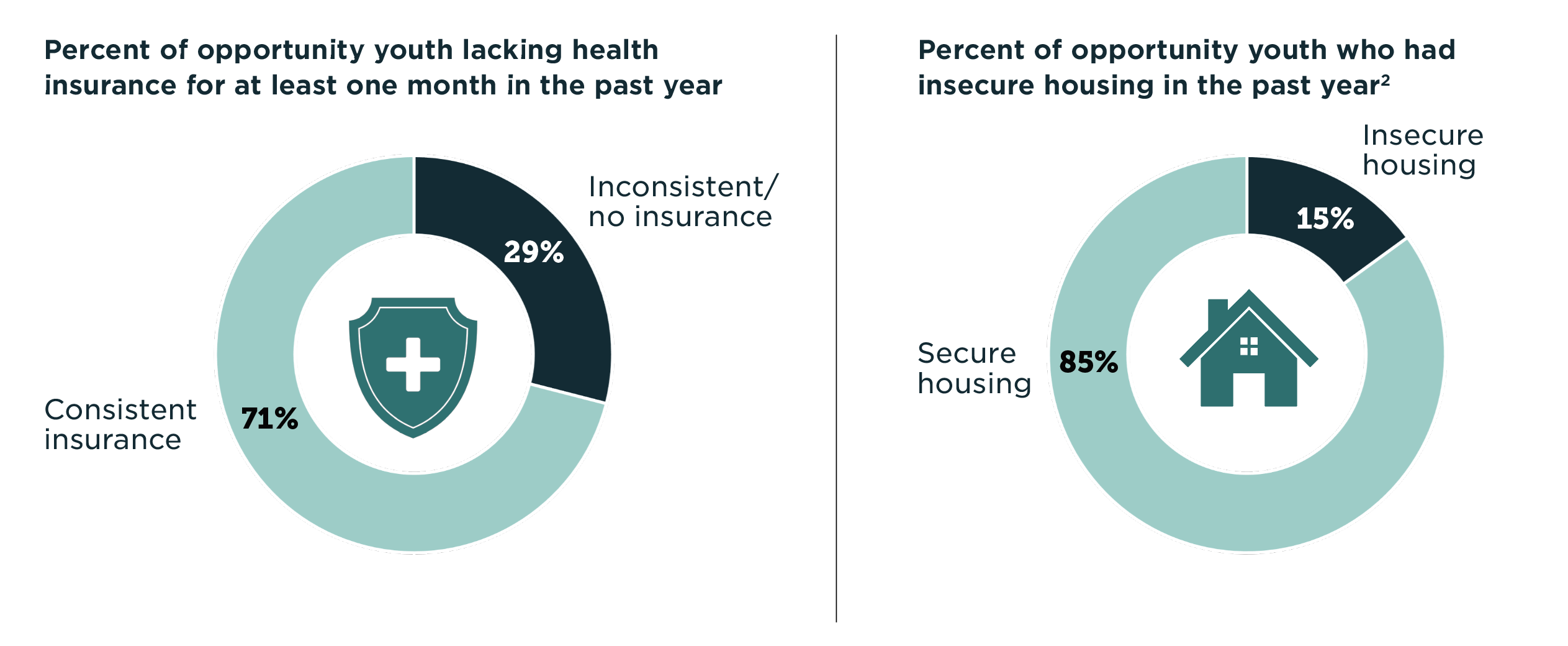
2Lacked a permanent place to stay at least one night in the past year.
Most opportunity youth have received information about sexual and reproductive health through both formal education (school or community-based) and informal conversations.3
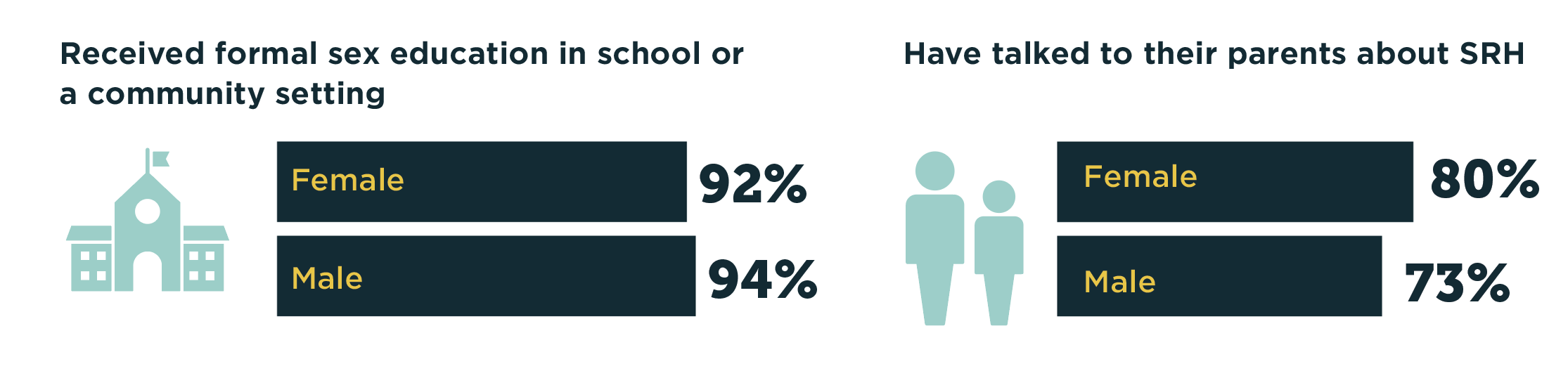
3Topics may have included condom use, where to get birth control, HIV/AIDS, and/or STIs. We do not know the timing or quality of the information.
Suggested Citation: Beckwith, S., DeCoursey, J., & Murphy, K., & Welti, K. (2023). Key Data for understanding the sexual and reproductive health of opportunity youth [infographic]. Bethesda, MD: Child Trends. https://activatecenter.org/resource/keydata-for-understanding-the-sexual-and-reproductive-health-of-opportunity-youth